
9/12/22
There are lots of reasons, out of practical and emotional necessity, why formal organizations are and have been an essential part of African-American culture since the late 1800s. There is power and comfort in numbers. Several people with a common bond and goals will be stronger than any individual. Furthermore, the history of segregation in America encouraged the need for black people to find strength in numbers for survivability and the physical and emotional safety net that those numbers would support.
The earliest organized groups in the African-American community initially rose from the Black Church. Once enslaved people in America were no longer a formal part of the plantation hierarchy, black churches formed under the commonality of Christian worship, political organizing, and social community building. As time went on, this trend extended to schools, political organizations, activist groups, work organizations, and social fellowships. Segregation necessitated separate and thriving black communities paralleling the white ones. By the early-mid 20th century, many African-American organizations were active and flourishing. My parents’ generation can clearly remember living in communities where their entire interactions were only with black people and black entities. Before the court decision of Brown v. Board of Education in 1954, most black people in America accepted segregation as a simple fact of life. Some from my parents’ generation will describe those days of their youth in terms of endearment. I can remember my grandfather telling me when I was a boy that integration hurt the black community more than helped it. Of course, those from my generation and younger were exposed to integration on a far greater level than our predecessors. So, perceptions are going to vary with different experiences.
As expected, golf followed other social norms prior to Brown v. Brown. In the early-mid 20th century, except for a couple of defiant and pioneering black-owned private clubs, black golfers were denied access to all private golf courses and many “public” courses, too. As stated in a previous post, many caddied and gained some limited access to courses through that work. As integration expanded in the 1960s and the popularity of golf grew in black and white America, access to public courses increased for black golfers. However, private course golf remained exclusively white well into the late 20th century.
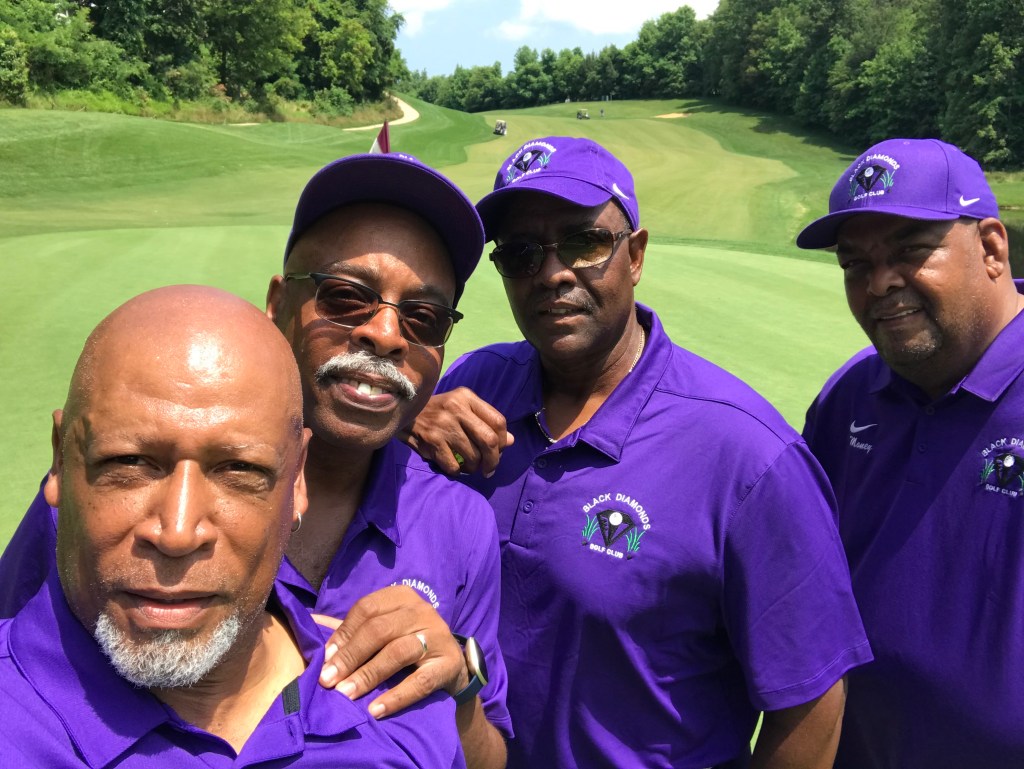
Out of the ashes of inaccessible, private club golf and as public golf course access increased, black golfers started to organize and find their path as other social organizations had before them. Around the Nation, black golf groups formed. Prior to access to the PGA, there were very talented golfers who played on the UGA (United Golfers Association). Like the Negro League in baseball, the UGA hosted events for professional players. However, as more “every day” golfers multiplied, organizations like the NNGA (The National Negro Golf Association, formed in 1965 in Pennsylvania) provided a venue for non-professional golfers similar to what white golfers had at white-only private clubs. These black clubs did not own property to play their own courses. They traveled to access “available” public courses. At these public courses, the black clubs held very similar events as the private clubs would. Their popularity grew, and they developed strength in numbers and fellowship, revolving around the common love of golf.
Today, these organizations are quite prolific and popular around the country. The fellowship found in black golf clubs is similar to the fellowship found in other black organizations. In addition, these golf clubs have connected with other black organizations (ie. fraternities, sororities, and other community service groups) to evolve beyond just playing golf. Nowadays, even though formerly white-only private clubs are more accessible to black golfers and have black members, these roving black golf clubs are thriving as an essential part of the black golf experience in America.


 Perspectives from an Average Black Golfer
Leave a reply to tholleyjr Cancel reply