
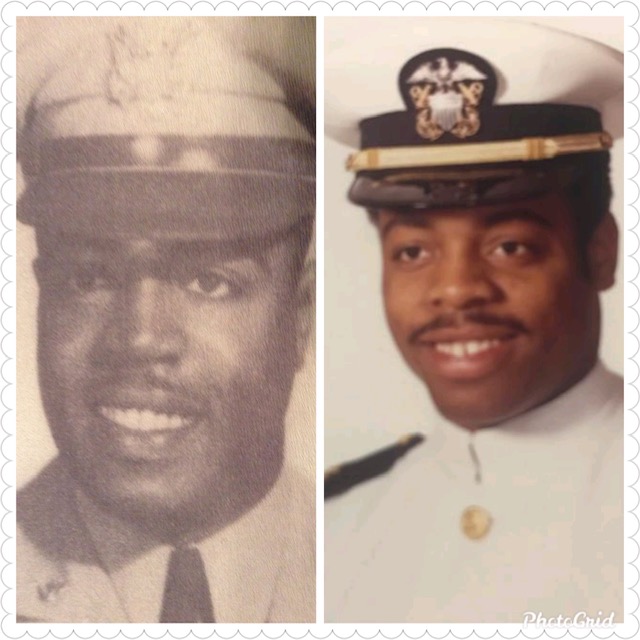
5/4/22
After some procrastination and with the very supportive urging of my wife, I am starting to put my golf thoughts on paper. I feel that having lived over six decades gives me some experienced perspective. Hopefully, this may lead to lots of essays on sharing my golf thoughts with others. In addition, I have long felt that there is a dearth of golf writing from the African-American perspective. I hope to help with my contributions.
For most black kids in the 1960s, golf was a distant world for a lot of reasons. First, sports participation for most African-American boys in those days only included football, basketball, or baseball. Our heroes were those we saw in those sports on television or on our local teams. We played what we knew and imitated our heroes. Second, most of us did not live in the vicinity of a golf course. More importantly, too, in the 1960s, most golf courses were not accessible to us because of open or implied racism. Simply put, black people were generally not welcomed on golf courses in America. Of course, there were exceptions. Those courses that were accessible to black people were really only truly accessible to black men. Women and children were not encouraged to participate. Most black men in those days had been introduced to golf either by caddying as boys or playing in school or in the military. So, lots of those men sought courses where they could continue to play and enjoy the game with like-minded souls. Slowly but surely, public courses became more accessible for these men but not their wives and children. Lastly, the economics of playing golf did not lure most black families to the game. Equipment and greens fees made the game cost-prohibitive to most black families in the 1960s.
My love affair with golf started when I was an adult. However, it is important to understand that my father made the effort to challenge the obstacles stated in the above paragraph. A graduate of an HBCU (Historically Black College or University) and its ROTC (Reserve Officer Training Corps) program, my father was exposed to golf in all three aforementioned categories. He’d grown up on the New Jersey shore and caddied as a boy to earn money and help his parents with expenses. He attended Morgan State in the early 1950s. majoring in physical education. That major gave him an introduction to golf as a player. He was a football and track athlete at Morgan State; there was not a lot of time for golf as a pastime. Golf remained on the “back burner” during his college years. After college, he served as a first and second lieutenant in the Army. It was in the Army that his passion for golf grew. While serving his two-year obligatory service, his commanding officer, who was white, “requested” that he play golf with him. For my father, that “request” was really an order. Officers could not socialize or fraternize with enlisted personnel; so, the social pool was small. Officers had to socialize together. In addition, military courses were not racially segregated. The combination of demand and access stoked my father’s golf desires. His long love affair with golf was born during his two years in the Army. After the Army, my father attended graduate school where he met my mother. After graduation, they married, started their careers as public-school teachers in Baltimore, Maryland. I came along the year after they married. By then my father had family, work, and golf as his top priorities. As most golfers and golf widows and widowers know, the order of those priorities can vary from time to time. Admirably, though, my father helped raised three sons successfully into adulthood and as of this writing, has been married to my mother for nearly sixty-four years! I’d say that he handled his responsibilities very well! What I know firsthand, though, trying to follow in my father’s footsteps, is that, as the old saying goes, “Golf is a demanding mistress.”
Given that preamble, to say that I am a “chip off the old block” is significantly understated! First, I am named after my father and therefore, am a “junior.” My father bought me golf clubs when I was around ten years old. Unlike most young African-American boys in the 1960s, his interest and resources gave me equipment and access to golf. He took me out to the driving range and tried to pass on his passion for golf to his son. Like most African-American boys in the 1960s, I wasn’t interested. I was hooked on football, basketball, and baseball, like every other black boy in my neighborhood and social sphere. In my naive outlook, I saw golf as only for rich, white people. It was a “country club” pastime (not really a sport), and no one in my neighborhood belonged to a country club. All of the country clubs in Baltimore were “white only.” Certainly, in my neighborhood, being a golfer was not seen as a positive, maybe even seen as a betrayal. It wouldn’t be until I was twenty-six that I was “bitten by the golf bug.” Unlike my father, I never caddied (more on that in another essay). Like my father, I played two sports in college (football and baseball, though) and picked up golf in the military (I was in the Navy). Like my father, a white officer asked me to go to the driving range with him (he did truly ask; we were the same rank). I went to the range and became totally obsessed! I left the range, went to the local K-Mart, and bought a starter set of clubs and balls. I came home to my bride of only two years and said, “I love this game!” Thirty-seven years later, here I am! Little did she know…
 Perspectives from an Average Black Golfer
Leave a comment